Celebrating Your Crumbling Identity

In Buddhism we call the notion of a fixed identity “ego clinging.” It’s how we try to put solid ground under our feet in an ever-shifting world. Meditation practice starts to erode that fixed identity. As you sit, you begin to see yourself with more clarity, and you notice how attached you are to your opinions about yourself. Often the first blow to the fixed identity is precipitated by a crisis. When things start to fall apart in your life, as they did in mine when I came to Gampo Abbey, you feel as if your whole world is crumbling. But actually it’s your fixed identity that’s crumbling. And as Chögyam Trungpa used to tell us, that’s cause for celebration.

Actively “Feeling Your Way” Towards Knowing

If there is no such map, then what is wayfinding? Instead of what he calls a “complex-structure metaphor” (the mental map), Ingold proposes a “complex-process metaphor” which he calls wayfinding. On page 220, he writes: “With a complex-process metaphor, little or no pre-structured content is imputed to the mind. Instead, wayfinding is understood as a skilled performance in which travelers, whose powers of perception and action have been fine-tuned through previous experience, ‘feel their way’ towards their goal, continually adjusting their movements in response to an ongoing perceptual monitoring of their surroundings.”

In this model, “we know as we go, from place to place” (229). “People’s knowledge of the environment undergoes continuous formation in the very course of their moving about in it” (230). This is not knowledge stored and then applied—it’s knowledge emerging through practice, through movement, through ongoing engagement with dynamic environments. This extends the dwelling perspective: we don’t design then act, we act and knowledge emerges from that immersion.

Wayfinding is more like storytelling, artistic performance, or musical improvisation. Just as a musical score isn’t the music itself—the music only exists in the actual performance—a map isn’t the same as the journey. The doing is what matters. And just as you can’t understand music by analyzing the score alone, you can’t understand wayfinding by studying mental representations. There is no such map to study because the process itself is what generates knowing.

Pain Warns You That You May Need to Change Your Behaviour

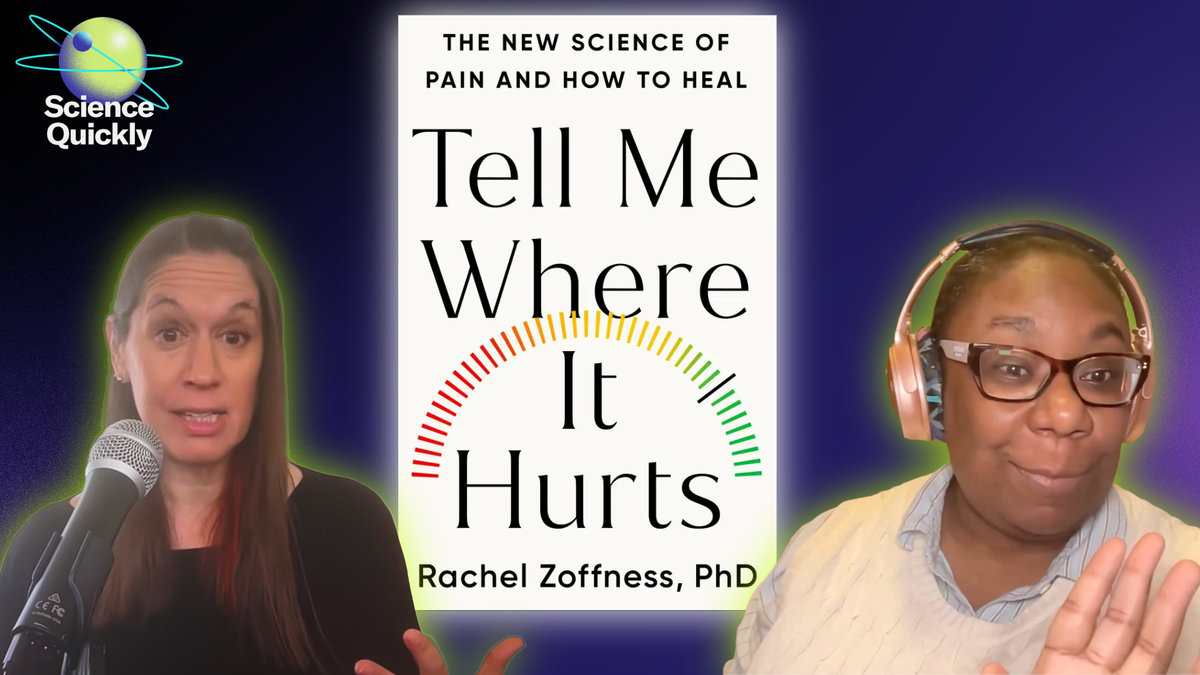
Yeah, so simply put, pain is our body’s warning system. It’s our danger-detection system. And it’s adaptive and evolutionary, right? Like, pain helps us survive. It tells us, “Pay attention. You may need to change your behavior. Something dangerous and bad might be happening.”

College Graduate Expectations of Adulthood Are Being Upended

Why College Graduates Feel Betrayed

Their anger goes far beyond the recent rise of unemployment and the looming threat of A.I.

nytimes.com

Perhaps most alarmingly, recent college graduates are having a harder time finding work. Between 1990 and 2018, it was almost unheard-of for the unemployment rate of recent college graduates to exceed the country’s overall rate. But that has been the case for five straight years now.

But for young college graduates, extended bouts of unemployment, or long periods stuck in a low-paying job that didn’t make use of their degrees, upended the entire picture of adulthood they had been taught to expect. In effect, a gap has opened up between the life that many graduates believed they had been promised and their actual prospects. And they’re seething about it.

For people in their 20s and early 30s, those expectations were forged as early as elementary school, when “college for all” became a national obsession — the way every American could achieve middle-class affluence.

And then, once they graduated, many found themselves with tens of thousands of dollars in loans, and no path to a job in line with their credentials.

In a high-wattage presidential election, when the country was primarily focused on cultural issues, college graduates and those without a degree often appeared to have little in common. But when it came to how they felt about their bosses or their bank accounts, it was suddenly harder to tell them apart. They were no longer on opposite teams.

Identity As a Continuous Cycle of Exploration

Identity is much less likely to be the result of a single breakthrough “aha!” moment and more of a continuous cycle of exploration, commitment, and reevaluation. Even the foundational work on identity formation by Erik Erikson suggested that the final product is never fully realized. Subsequent research shows that who you become is an open-ended, multidimensional process that is actively shaped through personal, social, and environmental contexts. And psychological flexibility has been linked to mental health, well-being, and school engagement.

The key question to ask is not whether these different selves are the same, but whether they are integrated. Psychological flexibility makes integration possible by anchoring these distinct context-dependent “selves” to an evolving set of values and goals. A fixed “take it or leave it” identity may seem authentic, but it can also narrow down the necessary exploration needed to create a well-developed identity.

That shift matters in the pursuit of identity. When we tell young people that there is a single “true self” and that it is their job to find it, uncertainty and confusion can feel like failure. When we realize that identity is something we can create and refine over time, exploration becomes healthy and necessary.

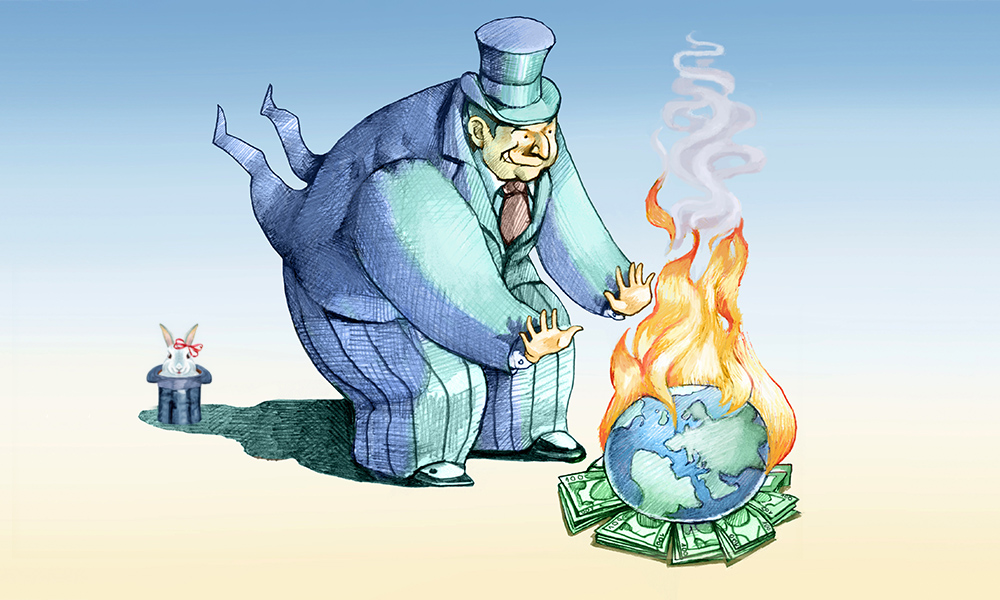
“Ethical” Capitalism Is an Illusion

The damage that companies inflict on society without literally paying for it entirely escapes ESG’s radar.

Today, corporate profits are at their highest proportion of GDP in 50 years, while wages are at their lowest. Overall, income inequality, has never been greater, not even in the Gilded Age, the period immediately preceding the Progressive Era, when many toiled in Dickensian poverty while a few, like the Vanderbilt dynasty, flaunted their extravagant and lavish lifestyles. Now, like then, the people, with justification, are losing faith in the system.

It is folly to ask business to do the work of government. The sooner we stop expecting companies like Exxon to be voluntary agents of social change and acknowledge that they are amoral profit machines, the sooner we can stop the flow of hypocrisy and greenwashing and start working on resolving the social and environmental crises that blight the lives of billions. The path to greater corporate social responsibility leads through the voting booth and the statehouse, not through Wall Street and the C-suite.

Our Possessions Are Alive

Sometime in the last twenty years, our possessions came alive.

What if the exhaustion everybody feels isn’t a moral failure but the completely rational response to being made responsible for an ecosystem of objects that never stop asking?